
Stroke in Dogs: Understanding Canine Cerebral Infarction
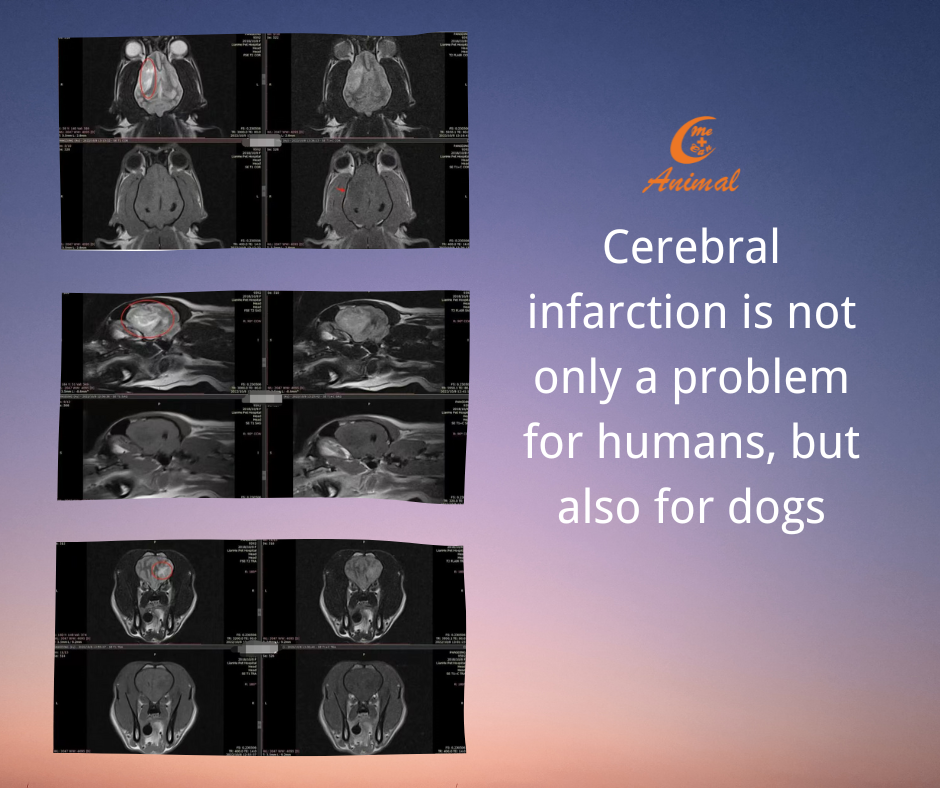
Did you know that dogs can also get brain infarction?
Cerebral infarction, also known as ischemic stroke, is a syndrome of neurological dysfunction due to ischemia and hypoxic necrosis of brain tissue when the blood supply
to the brain is impaired and there is no adequate collateral circulation to compensate for the blood supply.
Cerebral stroke, also known as cerebrovascular accident (CVA), or ischemic/Vascular in veterinary medicine, is a group of diseases that cause brain tissue damage due to sudden rupture of
blood vessels in the brain or failure of blood to flow to the brain due to vascular obstruction, including ischemic and hemorrhagic strokes.
By ischemic stroke here, we mean cerebral infarction
The causes of stroke are diverse, but in some cases, the exact cause cannot ultimately be found, specifically the following:
- systemic hypertension (primary hypertension, secondary to chronic CKD, Cushing, and other underlying diseases)
- Cardiac disease
- Hypercoagulable state
- Increased blood viscosity (true erythrocytosis, multiple myeloma)
- Intravascular tumors (lymphoma, angiosarcoma)
- Infectious diseases
- Atherosclerosis (associated with hypothyroidism, diabetes or hyperlipidemia)
- Surgical related
- Unknown, as yet unspecified

Most people don't notice that dogs are actually prone to sudden death too. According to recent statistics, cerebral infarction is considered to be the highest incidence of intracranial disease in
dogs. However, knowledge about dogs is not
widespread and first aid measures are not as well developed as in human medicine.
So unfortunately, the best time to treat the ischaemic semidark band is before 6h, but in practice, most cases in small clinical animals are beyond 6h at the time of presentation.
Principles of small animal brain infarction consultation.
"F" (face, face) refers to whether the patient has facial palsy or inflexible tongue licking.
"A" (arm, extremity) refers to whether the patient walks with weak limb strength, uncoordinated walking, spinning (walking involuntarily to one side, uncontrollable or difficult), or binge
walking.
"S" (speech) refers to abnormal howling or grunting by the patient.
"e" (epilepsy) refers to the sudden onset of epilepsy in a patient, or a history of epilepsy followed by uncontrollable epilepsy.
"T" (time) means that if any of the above occurs, the patient should be seen immediately at the first opportunity to save his or her life.
Ancillary tests that need to be done at the time of brain attack consultation
|
Advantages and disadvantages of high-order imaging of cerebral infarction in small animals |
||
|
CT |
Fast imaging speed (one scan completed in about the 30s) Relatively low cost |
Poor image resolution, inability to explore small lesions, perfusion requires drugging |
|
MRI |
High-resolution, multifunctional imaging for non-drug perfusion imaging 3D ASL |
Relatively longer and more expensive scanning time |
Here are a few additional points to emphasize:
1. small animals require anesthesia for all examinations.
2. there is no MRI queue for postponement of examinations in animals.
3. small animals have small brain tissue and relatively insufficient CT resolution.
In general, the diagnosis of brain infarction in small animals is more suitable to be performed under MRI.
If there is anything you need help with regarding our product, please do not hesitate to get in touch with us.
Underwater Treadmill in Canine Rehabilitation: Joint Surgery Recovery
Hyperbaric Therapy: One Real Animal's Success Story
Related Article


