
Subscribe to our Newsletter


Model No: MCL1408
Vet Microscope Binocular
Quantity :
Vet Microscope Binocular
Model: MCL1408
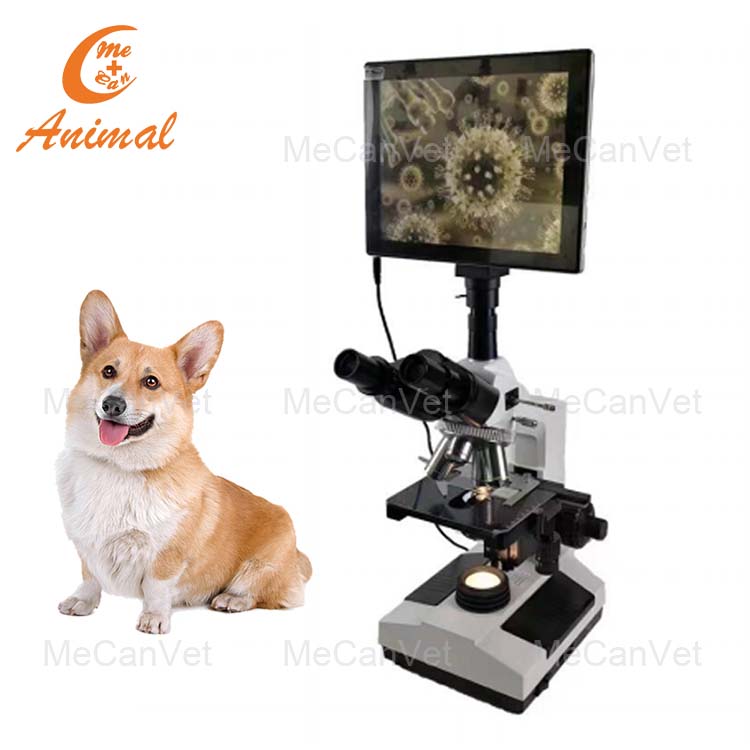
Structure:
This series of microscopes is composed of the following main components.
1. Objective lens case and Nosepiece:
Microscope objective lenses are engraved with various tags: magnification, Mechanical tube length/ Cover slip thickness. Such as: objective 40X: 40/0.65; 160/0. 17 means that the magnification is 40X; Mechanical tube length is 160mm; Cover slip thickness is 0. 17mm, and about the objective 100X oil, it is engraved with ‘oil’ .
Nosepiece guarantees smooth rotation by quadruple revolving nosepiece.
2. Eyepiece: Using WF10X wid field eyepiece.
This series of microscope’s binocular Tube spacing adjustable range is 55 mm-75 mm 3. Stage: it can be operated much easily by coaxial knob in a low position.
3. Condenser: ABBE condenser N.A. = 1.25 with iris diaphragm, kosher Illumi nation is optional.
The condenser can move up and down, and the condenser through strict assembly and calibration, and Users should not arbitrarily disassemble.
4. Course Focusing Adjustment:
Coarse/fine focal range is 20mm. and it is on the bottom of left and right side. Rotating the rough hands wheel, the working stage rapidly decrease or increase. About the micro hands wheel, it can make the stage move up and down fine. There is an indexing on the micro hands wheel. Every lattice is 0.002mm.
1. Objective lens case and Nosepiece:
Microscope objective lenses are engraved with various tags: magnification, Mechanical tube length/ Cover slip thickness. Such as: objective 40X: 40/0.65; 160/0. 17 means that the magnification is 40X; Mechanical tube length is 160mm; Cover slip thickness is 0. 17mm, and about the objective 100X oil, it is engraved with ‘oil’ .
Nosepiece guarantees smooth rotation by quadruple revolving nosepiece.
2. Eyepiece: Using WF10X wid field eyepiece.
This series of microscope’s binocular Tube spacing adjustable range is 55 mm-75 mm 3. Stage: it can be operated much easily by coaxial knob in a low position.
3. Condenser: ABBE condenser N.A. = 1.25 with iris diaphragm, kosher Illumi nation is optional.
The condenser can move up and down, and the condenser through strict assembly and calibration, and Users should not arbitrarily disassemble.
4. Course Focusing Adjustment:
Coarse/fine focal range is 20mm. and it is on the bottom of left and right side. Rotating the rough hands wheel, the working stage rapidly decrease or increase. About the micro hands wheel, it can make the stage move up and down fine. There is an indexing on the micro hands wheel. Every lattice is 0.002mm.
5. Base:
This is the basis of the product; there are four Rubber machine feet, to make it more Stable.
This is the basis of the product; there are four Rubber machine feet, to make it more Stable.
Applications:
MCL1408 of biological microscope is based on the XSP-2C, and combines advanced modular design, developing new products. The products have a high degree of standardization, and beautiful appearance, and also have the features of rational structure, easy of use, clarity of visual field, and quality stability. These products also are the general Equipment for medical, research, and teaching.
Maintenance:
- Handle with Care: Open the package carefully to prevent damage to lenses or accessories.
- Operational Procedures: Operate the microscope correctly and always use the dust cover after use.
- Avoid Dismantling: Refrain from dismantling the instrument unless necessary for replacement, to avoid misalignment.
- Storage Conditions: Store the instrument in a dry, cool place, away from pollution and corrosion.
- Professional Repairs: If the instrument malfunctions, send it to a specialized repair shop for maintenance.
- Long-Term Storage: If not in use for an extended period, place objectives and eyepieces in a dry box and cover the microscope with a dust cover.


